3,000-Gallon Cistern Installation for an Underproducing Well in Post Falls
If your well can't keep up with your water demand, you're not out of options. Adding a cistern is one of the most practical solutions out there - it lets your well slowly recharge while giving you a reliable reserve to draw from. That's exactly what we're doing here.
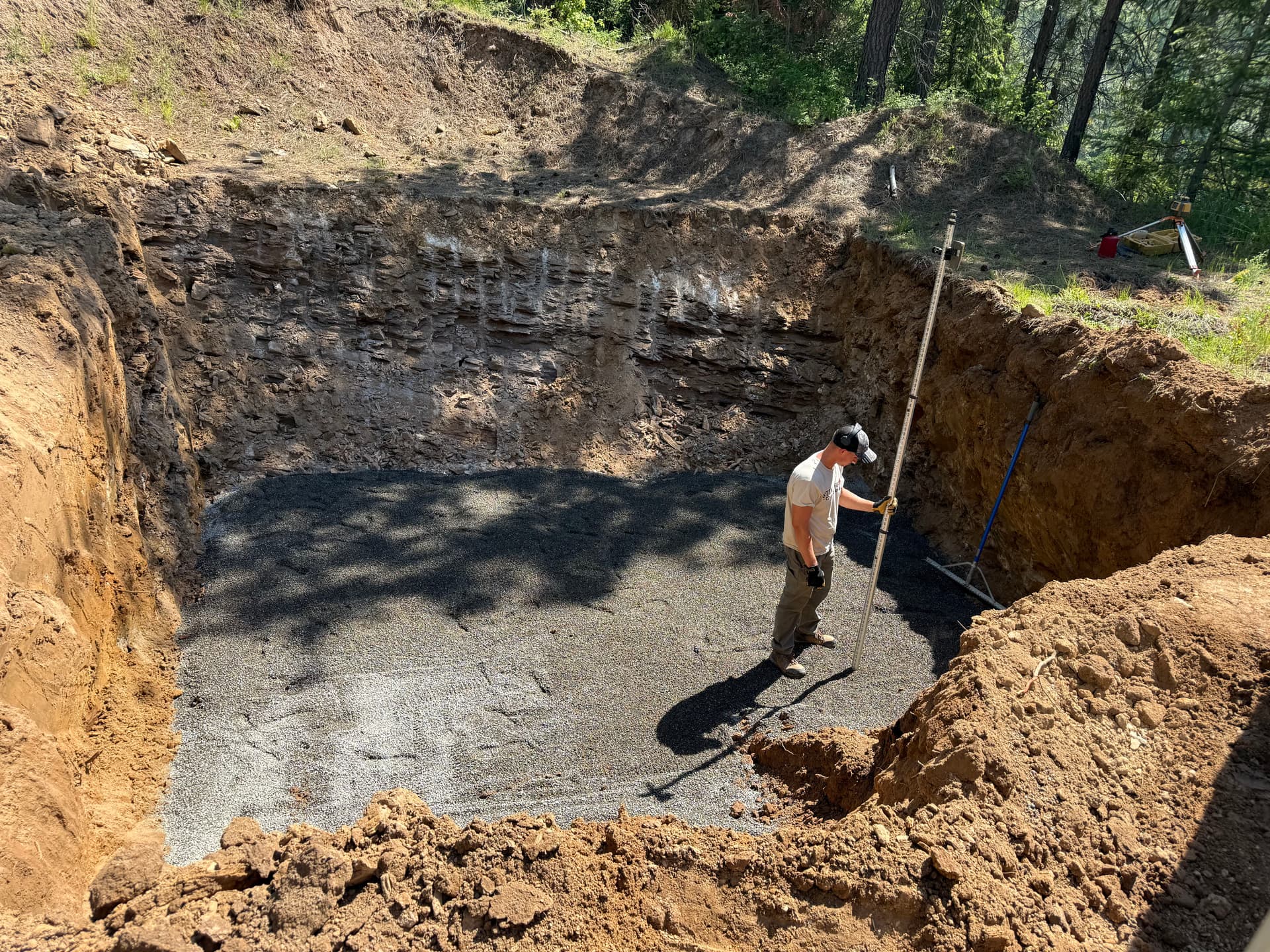
We excavated this hole to fit a 3,000-gallon cistern and an underground utility room. The ground we were working through had large, angular rock throughout - the kind of material that can cause real problems for tank bottoms if you just set them straight onto it. That's not how we do things.
Before anything gets set, we lay down a pea gravel base and fine-tune it until it's dead level. The pea gravel does two things - it gives us a forgiving, easy-to-adjust surface so the tanks sit perfectly flat, and it acts as a protective cushion between the tank bottoms and that harsh angular rock below. No shortcuts, no guessing.
Getting the base right at this stage means we won't be making adjustments after the tanks are in the ground. That matters more than most people realize. A tank that goes in level stays level, and a tank that's properly protected from the material around it is going to last.
This kind of detail-oriented work is what separates a solid installation from one that causes headaches down the road. Whether you're in Post Falls, Rathdrum, Hayden, or anywhere else in the region, if you're dealing with an underproducing well, underground water storage is worth a serious look.